
The Smallest Sign Of Hope
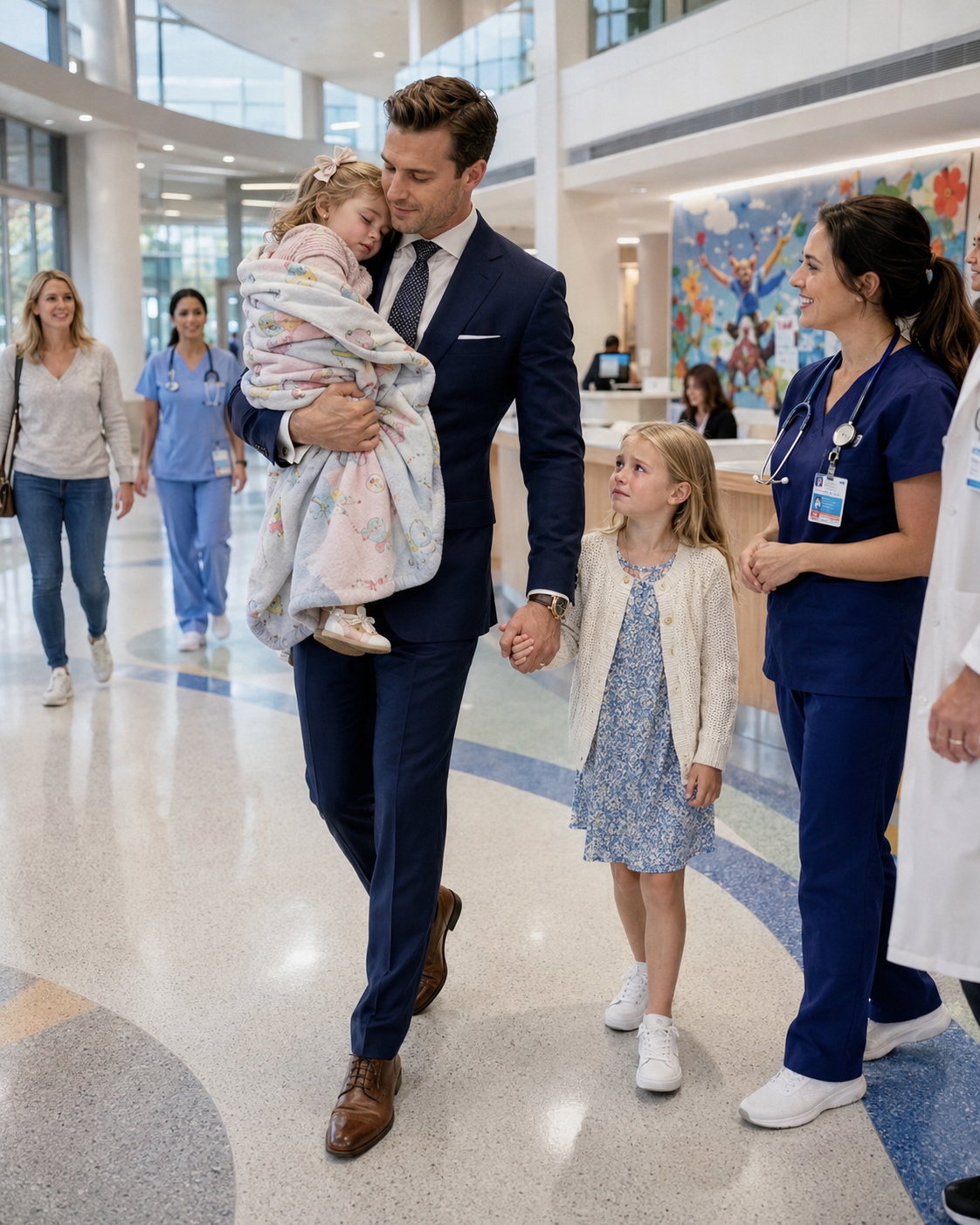
The afternoon that changed Andrew Caldwell’s life began with a room full of polished shoes, legal folders, and people speaking in the careful language of money.
He had spent nearly three hours on the thirty-fourth floor of a Denver office tower, seated at the head of a glass conference table while advisors discussed acquisition terms, equity percentages, and final approvals. Andrew was forty-four years old, the founder of a medical software company that hospitals across the country used every day, and by every public measure, he had become the sort of man people pointed to when they wanted proof that discipline and ambition could build a life from nothing.
Yet Andrew knew better.
Success had filled his calendar, his bank accounts, and his penthouse overlooking the mountains, but it had not filled the quiet rooms he returned to every night. Two years earlier, his wife, Margaret, had slipped away after a long illness that took her from him slowly enough to make every day feel like a goodbye. Before she left, she had held his hand with what little strength she had and said, “Promise me you won’t let your heart close just because mine is tired.”
He had promised.
Then, in the ordinary cowardice of grief, he had done the opposite.
He worked before sunrise. He answered emails past midnight. He became efficient, respected, unreachable. People called him focused, but Andrew knew focus was only the respectable name he had given to loneliness.
That December afternoon, when the meeting finally ended, he stepped outside into the cold brightness of downtown Denver. Snow from the night before had melted into gray water along the curb, and the air smelled of exhaust, coffee, and wet pavement. His driver was waiting by the black SUV, and Andrew was halfway there when he heard a small voice from the service alley beside the building.
It was not loud enough to draw attention from anyone else.
But it stopped him.
At the far end of the alley, tucked beside a stack of flattened cardboard boxes, sat a little girl with tangled blond hair and a sweatshirt much too thin for winter. She looked about eight years old, though her eyes seemed older in the way children’s eyes become older when they have had to understand too much. In her lap was a toddler, pale and still, wrapped in a faded blanket.
The girl looked up at Andrew with a kind of tired politeness that nearly broke him.
“Mister,” she whispered, “can you help me give my little sister a nice goodbye?”
Andrew could not move for a moment.
The alley, the cold, the small body in her arms—everything seemed to narrow around him. He thought of Margaret’s hand in his, of hospital lights, of all the times he had wished for one more chance to do something that mattered.
He knelt on the wet concrete without caring about his suit.
“What’s your name, sweetheart?” he asked gently.
“Lily.”
“Lily, I’m Andrew. I need to check your sister, okay? I’ll be careful.”
The girl tightened her arms. “Don’t take her away from me.”
“I won’t. I promise.”
He placed two fingers against the toddler’s neck. Her skin was cold, and for one awful second, he felt nothing. Then, faint as a whisper under water, there it was.
A pulse.
Andrew drew in a sharp breath.
“Lily,” he said, his voice shaking despite every effort to steady it, “your sister is still with us.”
The girl stared at him.
“She is?”
“Yes. She needs a doctor right now, but she’s still here.”
Lily’s mouth trembled. “I thought she went where Nana went.”
Andrew closed his eyes briefly, because that one sentence told him more than any report could have. There had been a grandmother. There had been loss. There had been a child trying to make sense of silence with the only explanation she knew.
He pulled out his phone and called the emergency department at a hospital his company had partnered with years earlier.
“This is Andrew Caldwell,” he said quickly. “I’m bringing in a toddler, unresponsive but with a pulse. Possible exposure, dehydration, and lack of food. Have pediatrics ready.”
Then he looked at Lily.
“I need to carry her now.”
Her face tightened. “Are you going to leave her somewhere?”
“No,” Andrew said. “I’m taking both of you somewhere safe.”
Slowly, as if she were handing over the whole world, Lily loosened her arms.
The toddler weighed almost nothing. That frightened Andrew more than anything else.
The Ride To Mercy General
People turned to stare as Andrew hurried from the alley with the small child in his arms and Lily running barefoot beside him. His driver opened the door before Andrew even reached the SUV.
“Mercy General,” Andrew said. “Fast, but careful.”
Inside the car, Lily climbed in and sat stiffly, her knees pressed together, her little hands clenched in her lap. Andrew slipped off his wool coat and wrapped it around her shoulders.
She looked at him as if kindness were a trick she had not yet learned how to escape.
“Is Rosie still breathing?” she asked.
So that was the toddler’s name.
Andrew looked down and counted the tiny rise and fall of Rosie’s chest.
“Yes,” he said. “She’s still breathing.”
Lily nodded, but she did not relax. “She gets thirsty when she wakes up.”
Andrew swallowed hard. “Then we’ll make sure someone helps her with that.”
The hospital doors opened before the SUV had fully stopped. Two nurses and a pediatric doctor were already waiting with a stretcher. The smell of sanitizer hit Andrew so hard he nearly stumbled, but he kept moving. This time, he would not freeze in a hallway. This time, there was still something to do.
“Two-year-old girl,” he told the doctor. “Name is Rosie. Weak pulse. Very cold. Older sister says she wouldn’t wake this morning. No guardian present.”
Lily stood in Andrew’s coat under the bright white lights, looking unbearably small.
A nurse crouched in front of her. “Honey, can you tell me your sister’s full name?”
“Rosie Parker,” Lily whispered. “I’m Lily Parker.”
Names mattered. Andrew had learned that long ago. A name turned a case into a child. A child into someone who belonged to the world.
As the medical team rolled Rosie through a set of swinging doors, Lily tried to follow, but a nurse gently stopped her.
“They’re going to help her first,” the nurse said. “You can see her soon.”
Lily looked up at Andrew. “Do I have to pay before they start?”
The question landed in him like a stone.
“No,” Andrew said. “You don’t have to pay.”
“But I told you I would when I’m grown.”
He crouched in front of her. “I believe you meant it. But children don’t owe adults money for helping them.”
Lily looked unsure, as though the idea contradicted every lesson life had taught her.
The Folded Paper

Within an hour, the hospital hallway filled with quiet urgency. A social worker arrived with kind eyes and a clipboard. A security officer stood nearby, not threatening, simply present. Nurses moved in and out of Rosie’s room with bags of fluid, warm blankets, and careful faces.
Andrew signed the financial responsibility form without asking the amount, but when the social worker began explaining procedure, he listened.
“Mr. Caldwell,” she said, “we’ll need to document exactly how you found the children. We also need to contact child services and locate any relatives.”
“Do whatever needs to be done,” Andrew replied. “I’m not trying to get around the process.”
She studied him for a moment, then nodded. “Good. The process is what protects them.”
Lily sat in a plastic chair, wrapped in Andrew’s coat and a hospital blanket. Someone gave her crackers and a carton of milk. She held them carefully but did not eat.
“Rosie first,” she said.
“Rosie is being helped,” Andrew told her. “You need help too.”
That seemed to confuse her.
The social worker asked where they had been staying. Lily answered in pieces. A laundromat when it was very cold. Behind a diner when the owner had already left. Under a covered church entrance one night when snow came down softly and Rosie would not stop shaking.
She spoke without drama, the way another child might describe a school bus route.
Then the social worker noticed Lily shifting her foot.
“Does your shoe hurt?” she asked.
Lily froze.
Andrew saw fear cross her face, quick and sharp.
“You’re not in trouble,” he said softly.
After a long pause, Lily reached into the back of her dirty sneaker and pulled out a folded piece of paper. It was worn thin at the creases, the ink blurred in places from weather and walking.
The social worker unfolded it.
Her expression changed.
Andrew saw only a little: two children’s names, an old phone number, and a shaky line of handwriting.
Lily whispered, “Nana said if things got bad, show it to a helper. But I thought helpers cost money.”
The nurse standing nearby turned away and pressed a hand to her eyes.
Andrew looked down at the floor, ashamed of every important meeting he had ever believed could not wait.
The Next Decent Thing
By late afternoon, the doctor came out and told them Rosie was responding to treatment. She was weak, very dehydrated, and far too cold when she arrived, but the team had reasons to hope.
Lily covered her mouth with both hands.
“Can I see her?”
“For a minute,” the doctor said gently.
Through the glass, Rosie looked tiny in the hospital bed, her hair brushed back from her forehead, a small wristband around her arm. Lily pressed her palm to the window.
“Hi, Rosie,” she whispered. “I found somebody.”
Andrew stood behind her holding a paper cup of coffee he had forgotten to drink. For the first time in two years, he heard Margaret’s voice clearly in his memory.
“Sometimes you just do the next decent thing.”
He had spent so long believing grief was a locked room. But maybe it was also a door. Maybe pain did not make a person useful, but it could make him recognize another person’s need when the rest of the world walked past it.
That evening, the phone number on the folded paper led to an elderly neighbor who confirmed enough of Lily’s story for the social worker to begin the next steps. There would be interviews, records, temporary placement decisions, and careful searches for safe relatives. Andrew understood he could not sign one check and fix everything.
But Rosie was warm.
Lily was fed.
And neither child was in the alley anymore.
When the night nurse told Andrew that Lily had fallen asleep in the chair, still holding the sleeve of his coat, he did not leave right away. He stood beneath the small American flag near the reception desk and looked down the bright hospital hallway.
The last time a hospital had changed his life, he had walked out emptier than he had arrived.
This time, he had walked in carrying a child who still had a chance.
The next morning, Andrew returned before sunrise with clean clothes approved by the social worker, a pair of soft sneakers for Lily, and a small stuffed rabbit for Rosie.
Lily woke when she heard his voice.
For a moment, she only stared at him.
“You came back,” she said.
“I told you I would.”
She looked at the sneakers. “Are these for working?”
“No,” Andrew said. “They’re for walking out of here when it’s time.”
Lily touched the laces with two careful fingers. Her eyes filled, not with panic this time, but with something quieter and braver.
Hope.
Andrew sat beside her and, for the first time in years, did not feel like a man merely passing through his own life. He did not know what the future would hold for Lily and Rosie. He did not know how complicated the process would become. He only knew that one small voice in an alley had reached a part of him he thought was gone.
A city full of people had nearly missed her.
Andrew had nearly missed her too.
That truth stayed with him.
Because sometimes the moment that changes a life does not arrive with grand music or perfect timing. Sometimes it waits beside wet cardboard on a cold afternoon. Sometimes it weighs almost nothing in your arms. Sometimes it looks up at you with tired blue eyes and asks for one impossible kindness, when what it really needs is someone willing to believe there is still time.